How to stop the swipe in the first seconds of a Short (October 2026)
Shortsmith team · Updated
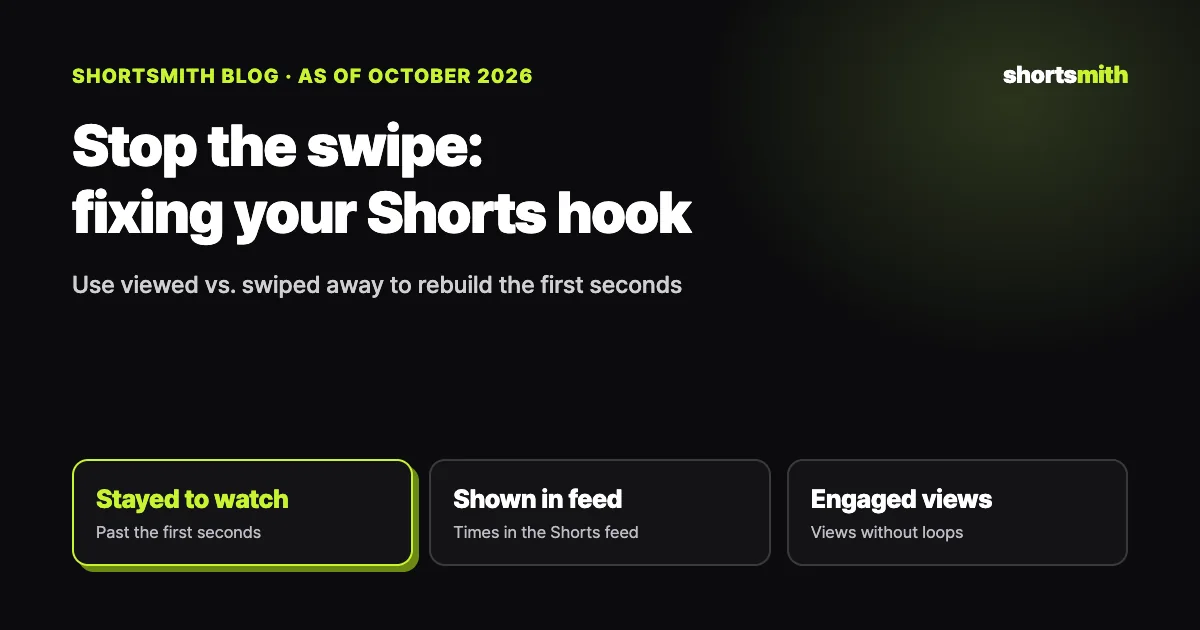
Whether people swipe past your Short or stay is measured in YouTube Studio by Stayed to watch. YouTube Help defines it as the percentage of times viewers stayed to watch past the initial seconds of a Short, and the Content tab shows it as the share of times viewers viewed your Shorts versus swiped away. If that number is low, fix the first shot before anything else.
We checked YouTube Help's "Understand your YouTube content performance" and "Content tab analytics tips — Shorts" on October 12, 2026. This guide covers the metrics to read alongside it, the view-counting change that took effect on August 24, 2026, and a step-by-step way to rebuild a hook, using Shortsmith's question-first openings as examples.
Three metrics that show the first seconds of a Short
| Metric | Definition (YouTube Help) | How to read it |
|---|---|---|
| Shown in feed | How many times your Shorts appeared in the Shorts feed | How much YouTube tested the Short |
| Stayed to watch | Share of times viewers kept watching past the initial seconds (viewed vs. swiped away) | Whether the first shot held people |
| Engaged views | Times viewers stayed past the initial seconds, not counting loops | Closest to the number of real viewers |
| Average view duration and percentage | Calculated only from people who stayed to watch | Whether the story held them after the first shot |
Key point
Lots of feed impressions with low Stayed to watch means the first shot is the problem. High Stayed to watch with a low average percentage viewed means the middle is the problem. Read them separately to know what to fix.
Views changed on August 24, 2026: what to watch instead
Since August 24, 2026, YouTube counts a view the moment a video starts to play, across Shorts, long-form videos and live streams. Public Shorts view counts can therefore look much higher than before. YouTube says the change does not affect Partner Program earnings or eligibility: earnings are still based on engaged Shorts views and engaged watch hours, and eligibility on qualified Shorts views and qualified watch hours.
So when you fix a Short, look at Stayed to watch and engaged views rather than the public view count. Public views include plays that only flicked past in the feed, while engaged views only count viewers who stayed past the first seconds. Comparing public views from before and after August 24 can make a channel look better than it is.
Five first shots that make people swipe
Shorts with low Stayed to watch tend to share the same opening problems: viewers cannot tell what the video is, see no reason to watch, or get the reason too late. These five show up most often in the first one or two seconds.
- Opening with a logo, a greeting or a channel intro, so the point arrives after three seconds
- Showing the ending first, which removes the reason to keep watching
- No text on screen, so viewers with sound off cannot tell what it is about
- A dark or static first frame
- A title and a first shot that tell different stories
Turning the first shot into a question
This matches the principle YouTube recommends for Related video links. YouTube's official blog says that just as a thumbnail makes a promise the intro must keep, a Short creates an expectation the next video must meet in its first five to ten seconds. When the question in the first shot connects to the answer in the last, viewers have a reason to stay.
- Pick one question the whole Short will answer, for example "What happens when half a jar of hot sauce goes in?"
- Show that question right away in the first shot. Put it in the title band at the top and keep the answer hidden.
- Choose a moving shot for the first second. Push static or dark shots later.
- Use the middle for evidence toward the answer, and answer it in the final scene.
- Check Stayed to watch and engaged views for 48 hours after posting. If they are low, apply a new first shot to your next Short.
How Shortsmith builds the first shot
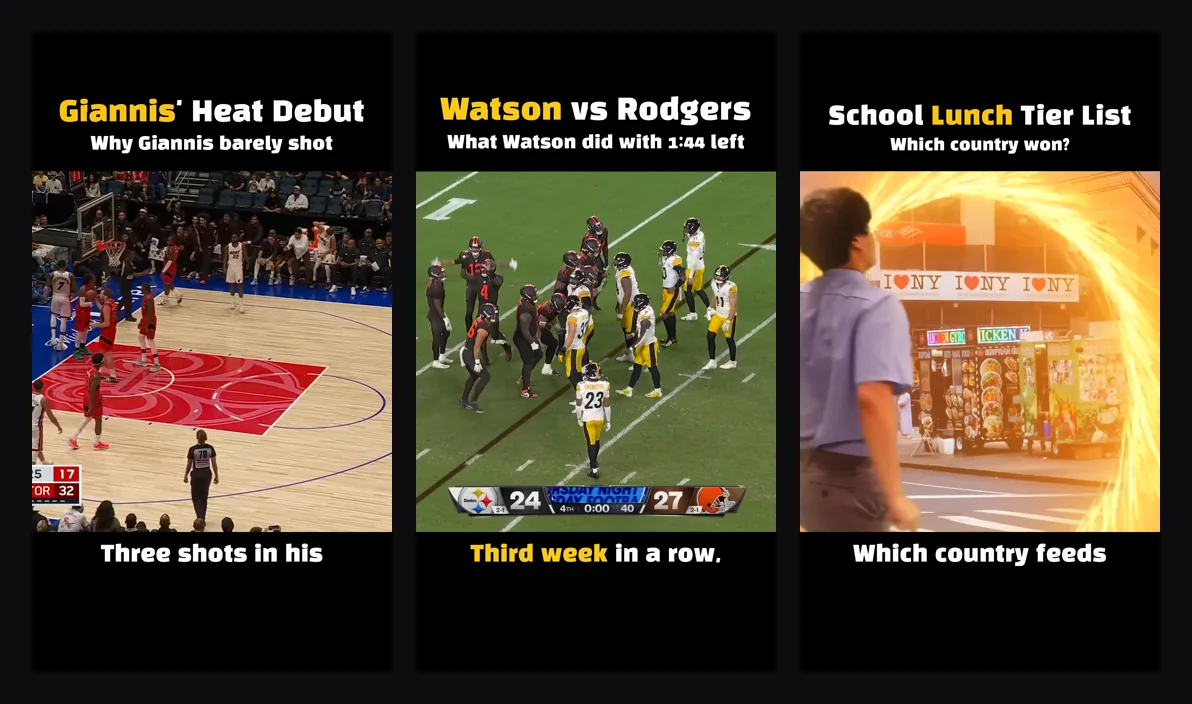
Shortsmith reads the whole video, picks a story angle and writes the script in hook, evidence, payoff order. The first scene carries the question the Short will answer, the black band at the top shows a question-style title, and the payoff stays hidden until the end. The image below shows the first frames of finished Shortsmith videos. In all three, the first frame already tells you what you are about to see and what to wonder about.
If you do not like the first shot, change the hook scene's source clip or the title wording in the editor and render again. To test a different question with the same source, make another Short from one of the other story angles Shortsmith suggested and compare Stayed to watch.
A first shot that works with the sound off
Many people scroll Shorts with the sound off. If your question only exists in the audio, they see a screen where nothing is happening. Put the question on screen too: write it in the title band at the top and caption every spoken line. Keep captions slightly above the very bottom of the frame so the app's caption area does not cover them.
For viewers with sound on, the first words matter. A short question about what is on screen, or one surprising number, beats a greeting or "today we're going to". In a cut edit that keeps the original audio, open on the moment with the biggest reaction. With narration, make the first sentence a question.
FAQ
Where do I find Stayed to watch?
In YouTube Studio, go to Analytics, then the Content tab and its Shorts section, or open the analytics for a single Short. Read it together with Shown in feed.
What is a good Stayed to watch percentage?
YouTube does not publish a benchmark. Compare Shorts on your own channel with similar length and topic, and look at how the first shots of high and low performers differ.
My views jumped after August 2026. Did my Shorts improve?
Not necessarily. Since August 24, 2026 a view counts as soon as playback starts. Earnings and eligibility still use engaged and qualified views, so judge progress by engaged views and Stayed to watch.
Are longer Shorts worse for Stayed to watch?
Stayed to watch measures whether people got past the first seconds, so length matters little there. Length shows up in average percentage viewed. Make the Short as long as the story needs and open with a question either way.
Can I re-upload the same Short with only a new first shot?
Posting the same video repeatedly with small changes can look like repetitive content. Leave the weak Short up and apply what you learned to the first shot of your next one.
Sources
- Understand your YouTube content performance — YouTube Help · checked
- Content tab analytics tips — Shorts — YouTube Help · checked
- How to convert YouTube Shorts views into long-form channel growth (July 14, 2026) — YouTube Official Blog · checked